
Automation Electrical Troubleshooting
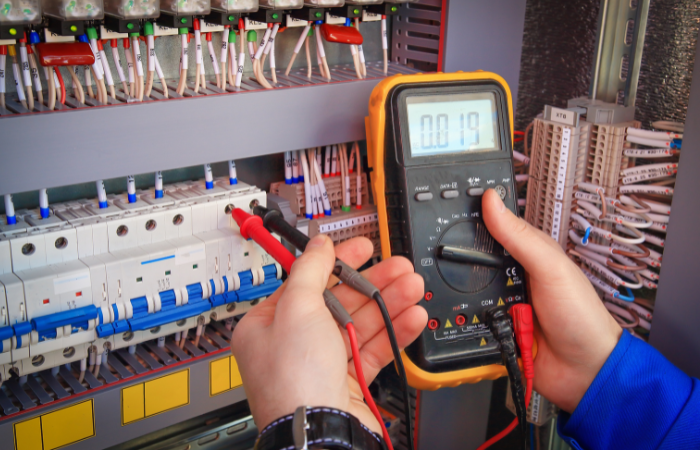
Electrical Fundamentals & Troubleshooting
This course helps students solidify the fundamentals of electricity and understand common electrical faults through a combination of classroom instruction, simulated activities, and hands-on circuit work.
Students will review the core concepts of voltage, resistance, and current using both simulated and real-life circuits, and explore how these elements interact through the equations of Ohm’s Law.
The course also focuses on identifying how common electrical faults affect circuits—including loss of voltage, bad neutral pathways, broken components, and shorts to ground—and how to systematically diagnose these issues.
Troubleshooting Methodology
Students will learn and apply the Bridgerland Troubleshooting Methodology in both real and simulated circuits.
Each student will receive a Bridgerland Troubleshooting Methodology booklet and a 4-month license to Simutech troubleshooting software.
Learning Outcomes
- Explain and apply the concepts of voltage, resistance, and current
- Demonstrate how to use Ohm’s Law equations in real-world scenarios
- Explain the five most common electrical faults and how they affect a circuit
- Explain and demonstrate how to troubleshoot the five most common electrical faults
- Explain and demonstrate the Bridgerland Troubleshooting Methodology
Cancellation & Refund Policy
Individuals are responsible for canceling their registration should they not be able to attend. Refunds will not be issued for non-attendance. Cancellations received before the first day of class will receive a 100% refund. No refunds will be given on or after the first day of class.
About the Class
Registration
| Class Date | Registration Code (phone registration) |
|---|---|
| TBD | CE07 0050 02 LC |
Need help? If you have any issues with registration, contact Student Services.
Phone: 435-753-6780
Our Mission
The mission of the Bridgerland Technical College is to deliver competency-based, employer-guided career and technical education to both secondary and post-secondary students through traditional and technology-enhanced
methodologies. This hands-on technical education provides occupational education, skills training, and workforce development to support the educational and economic development of the Bear River Region.