Data Technology
Introduction
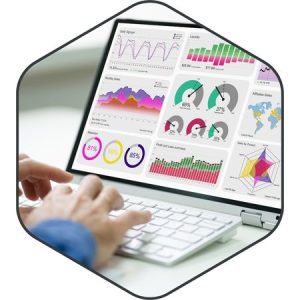
The Data Technology program prepares students for roles in technology, finance, healthcare, ecommerce, manufacturing and more. The competency-based curriculum provides training through real-world simulations, personalized mentoring, and practical coursework. Students develop skills in initiating data projects, sourcing information, transforming datasets, analyzing data, and presenting results which form an essential toolkit for the field of data analytics.
Objectives
- Explain data types, data structures, and data sources.
- Diagram the complete data analytics project cycle.
- Identify and articulate data-driven problems and questions.
- Utilize various tools including spreadsheets, SQL, Python, and R for data gathering, data cleaning, and analysis.
- Calculate descriptive statistics, perform exploratory data analysis, and inferential statistics for insights.
- Communicate insights derived from data analysis efficiently and persuasively through visualizations, presentations, and reports.
- Construct SQL queries, querying, filtering, and manipulating data within relational databases.
- Apply machine learning principles for preprocessing, model construction, and evaluation.
- Incorporate industry-standard tools and practices for impactful visualizations and extracting meaningful insights.
- Initiate comprehensive projects applying acquired skills to solve real-world problems, while effectively managing time and objectives.
Courses and Syllabi
Syllabi
Providing course syllabi ensures openness and transparency in course expectations, fostering a clear and accessible learning environment for all students.
View syllabi for Data Analytics Department courses (opens in a new tab)
Program Courses
How to Apply
-
About Your Program
This program starts four times a year: July, October, January, and April. Enrollment is first come, first served. Please contact a Student Success Advisor with any questions you may have about a program. You can check the start dates here.
Make an appointment with a Student Success Advisor (opens in a new tab)Not ready to schedule? You can text questions to (435) 261-9877.
-
Admission to the College
Complete the Certificate-Seeking Application. College admission policy requires a student to have a high school diploma or its recognized equivalent.
-
Programmatic Requirements
Students will receive additional pre-enrollment programmatic requirements, if applicable, via email. If you have not received this email within 24 business hours, please check your spam or junk mail folders.
Complete Introduction to Data Analytics (DATA0995) with a B- or better. This course familiarizes students with the overall process of data analytics, essential skills, and careers. Students also experience stages of a data project by using Excel to clean, analyze, and describe real-world datasets and get a brief introduction to Python.
OR
Related associate's degree or higher (from a nationally or regionally accredited institution as approved by the Department Head) or related industry experience (as approved by the Department Head).
-
Enrollment and Registration
Once the programmatic requirements have been completed, the next step is to meet with a Student Services Representative to complete your enrollment. You will declare your starting date, enrolled hours, and arrange payment.
The first month’s payment or completed Financial Aid is required at the time of enrollment. No appointment is necessary.
Questions? Call (435) 753-6780, email studentservices@btech.edu, or visit Student Services at the Logan Campus.
Financial Aid
Scholarships
Checklist
- Your Student ID
- Letter of recommendation
- Personal history and career objective
- High school transcript
The Process
- BTECH emails a link to schedule a Scholarship Interview.
- Interview with the Scholarship Committee (generally 3rd Tuesday of each month).
- BTECH evaluates the interview rubric and available funds.
- Award results are typically sent within 4 weeks.
- If awarded, you receive a link to schedule a meeting to accept the award.
- BTECH disburses scholarship funds.




Bridgerland Technical College on Instagram
Bridgerland Technical College
Follow us for photos, videos, and campus updates.
SEE THE CAREER
Are You Ready For the Next Step
Take the next steps and move to the next level of your career/education
Our Mission
The mission of the Bridgerland Technical College is to deliver competency-based, employer-guided career and technical education to both secondary and post-secondary students through traditional and technology-enhanced
methodologies. This hands-on technical education provides occupational education, skills training, and workforce development to support the educational and economic development of the Bear River Region.