
Emergency Medical Technician
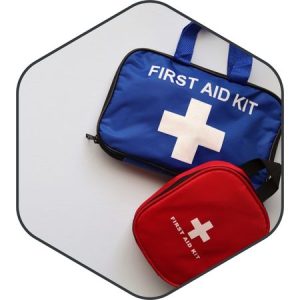
The Emergency Medical Technician program provides training for out-of-hospital emergency medical care and transportation of critical and emergent patients who access the emergency medical services (EMS) system. Emergency Medical Technicians (EMTs) have basic knowledge and skills necessary to stabilize and safely transport patients ranging from non-emergency and routine medical transports to life-threatening emergencies. EMTs function as part of a comprehensive EMS response system, under medical oversight. EMTs perform interventions with the basic equipment typically found on an ambulance. EMTs are a critical link between the scene of an emergency and the health care system.
Objectives
- Apply fundamental knowledge of the anatomy and function of all human systems to the practice of EMS.
- Use foundational anatomical and medical terms and abbreviations in written and oral communication with colleagues and other healthcare professionals.
- Apply fundamental knowledge of the pathophysiology of respiration and perfusion to patient assessment and management.
- Apply fundamental knowledge of lifespan development to patient assessment and management.
- Properly administer or assist in administering medications to a patient during an emergency.
- Utilize fundamental knowledge of the EMS system, safety/well-being of the EMT, and medical/legal and ethical issues to the provision of emergency care.
- Apply knowledge (fundamental depth, foundational breadth) of anatomy and physiology to patient assessment and management to assure a patent airway, adequate mechanical ventilation, and respiration for patients of all ages.
- Interpret scene information and patient assessment findings (scene size-up, primary and secondary assessment, patient history, reassessment) to guide emergency management.
- Provide basic emergency care and transportation based on assessment findings for an acutely ill patient.
- Apply a fundamental knowledge of the causes, pathophysiology, and management of shock, respiratory failure or arrest, cardiac failure or arrest, and post-resuscitation management.
- Provide basic emergency care and transportation based on assessment findings for an acutely injured patient.
- Utilize principles of growth, development, aging, and assessment findings to provide basic emergency care and transportation for a patient with special needs.
- Perform in accordance with operational roles and responsibilities to ensure patient, public, and personnel safety when responding to an emergency.
Syllabi
Providing course syllabi ensures openness and transparency in course expectations, fostering a clear and accessible learning environment for all students.
View syllabi for Emergency Services Department courses (opens in a new tab)
Program Courses
-
About Your Program
This program is defined-entry, defined-exit. Please contact a Student Success Advisor for a start date or with any questions you may have about a program.
Make an appointment with a Student Success AdvisorNot ready to schedule? You can text questions to (435) 261-9877.
-
Admission to the College
Complete the Certificate-Seeking Application below. College admission policy requires a student to have a high school diploma or its recognized equivalent.
-
Programmatic Requirements
Students will receive additional pre-enrollment programmatic requirements, if applicable, via email. If you have not received this email within 24 business hours, please check your spam or junk mail folders.
Students must have a high school diploma or recognized equivalent and be 18 years old at the time of registration. Students will be required to adhere to all policies, immunization standards, and safety procedures required by the clinical site at which they work. A non-refundable $50 background check fee is required and must be completed before class begins.
-
Enrollment/Registration
Once the programmatic requirements have been completed, a Student Success Advisor will contact you with a start date. Full payment or completed financial aid is required at the time of registration.
No appointment is necessary.
If you have any questions, Student Services can be reached at 435-753-6780 or studentservices@btech.edu or you can visit us in person at the Logan Campus!
Scholarships
Checklist
- Your Student ID
- Letter of recommendation
- Personal history and career objective
- High school transcript
The Process
- Soft deadline: the 5th of each month.
- BTECH gathers applications submitted during the previous month.
- The Scholarship Committee reviews each application.
- BTECH evaluates available funds.
- Award results are typically sent within 4–6 weeks.
- If awarded, you receive a link to schedule a meeting to accept the award.
- BTECH disburses scholarship funds.
Need help?


Bridgerland Technical College on Instagram
Bridgerland Technical College
Follow us for photos, videos, and campus updates.
Are You Ready For the Next Step
Take the next steps and move to the next level of your career/education
Our Mission
The mission of the Bridgerland Technical College is to deliver competency-based, employer-guided career and technical education to both secondary and post-secondary students through traditional and technology-enhanced
methodologies. This hands-on technical education provides occupational education, skills training, and workforce development to support the educational and economic development of the Bear River Region.