
Drafting and Design
Introduction

Students in the Drafting and Design program will be immersed in a project-based curriculum that may be focused on architectural drafting, mechanical drafting, and/or civil drafting. They will receive one-on-one aid from experienced instructors, review best practices, and focus on industry standards. All courses are computer use intensive and competency based. Students will develop a strong working knowledge of visual communication and its technical skills. Upon completion, students are prepared for entry-level employment in drafting and design fields and/or continuing their education in related disciplines.
Objectives
- Develop a general knowledge of the drafting and design industries.
- Define terminology and processes related to drafting and design.
- Demonstrate correct sketching techniques.
- Use visual communication to convey design ideas.
- Interpret and prepare industry standard documents.
- Create accurate 2D and 3D models using state-of-the-industry software.
- Develop drawings that align with industry conventions and standards.
- Practice redlining and iterating designs.
- Create physical models.
Courses/Syllabi
Syllabi
Providing course syllabi promotes openness and transparency in course expectations and supports a clear, accessible learning environment for all students.
View Drafting and Design Department course syllabi (opens in a new tab)
Program Courses
How to Apply
-
About Your Program
Bridgerland Technical College is open year-round. Most programs are open-entry, which means you can start at the beginning of each month as long as space is available.
Please contact a Student Success Advisor for Drafting and Design with any questions about your program. You can also view available program start dates .
Make an appointment with a Student Success Advisor (opens in a new tab)Not ready to schedule? You can text questions to (435) 261-9877.
-
Admission to the College
Complete the Certificate-Seeking Application. College admission policy requires a student to have a high school diploma or a recognized equivalent.
-
Programmatic Requirements
Students will receive additional pre-enrollment programmatic requirements (if applicable) via email. If you do not receive this email within 24 business hours, please check your spam or junk mail folders.
WorkKeys Assessment: Workplace Documents (Level 5), Graphic Literacy (Level 5), and Applied Math (Level 5).
Please note: A composite ACT score of 17 or a composite SAT score of 930 can waive assessment requirements if taken no more than four years prior to enrollment. If you attended BTECH as a high school student, you may be able to waive the Academic Assessment with your grades. Contact a Student Success Advisor for more information.
-
Enrollment and Registration
Once programmatic requirements are completed, a Student Success Advisor will contact you with an available start date. Email a Student Success Advisor (advising@btech.edu) if you have any questions about your start date.
Once you have been offered a start date, meet with a Student Services Representative to finalize enrollment. You will declare your start date, enrolled hours, and arrange payment.The first month’s payment or completed Financial Aid is required at enrollment. No appointment is necessary.
Questions? Call (435) 753-6780, email studentservices@btech.edu, or visit Student Services at the Logan Campus.
-
Financial Aid
Bridgerland Technical College offers a variety of financial aid options for Drafting and Design for students who qualify.
Bridgerland Technical College does not participate in, or endorse, any student loan programs.
Financial Aid
FAFSA and Pell Grant
Checklist
- Social Security Number or Alien Registration number (if you’re not a U.S. citizen)
- Federal income tax returns, W-2s, and other records of money earned
- Bank statements and records of investments (if applicable)
- Records of untaxed income (if applicable)
The Process
- BTECH receives your FAFSA record.
- Financial Aid emails you instructions to create a VerifyMyFafsa account.
- You submit the required documentation.
- You complete enrollment with BTECH.
- Financial Aid emails a link to schedule a required Financial Aid Offer meeting.
- Pell Grant is disbursed (if eligible).
Scholarships
Checklist
- Your Student ID
- Letter of recommendation
- Personal history and career objective
- High school transcript
The Process
- Soft deadline: the 5th of each month.
- BTECH gathers applications submitted during the previous month.
- The Scholarship Committee reviews each application.
- BTECH evaluates available funds.
- Award results are typically sent within 4–6 weeks.
- If awarded, you receive a link to schedule a meeting to accept the award.
- BTECH disburses scholarship funds.
Veterans
- Complete the Veterans checklist
- Contact the VA Certifying Official: nmcinelly@btech.edu
Need help?

Draftsperson working directly on blueprints with measurements.
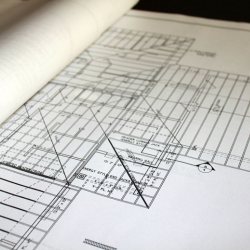
Side view of a blueprint

A completed house sitting on top of a blueprint.

Blueprints put together by a draftsperson.
Bridgerland Technical College on Instagram
Bridgerland Technical College
Follow us for photos, videos, and campus updates.
Are You Ready For the Next Step
Take the next steps and move to the next level of your career/education
Our Mission
The mission of the Bridgerland Technical College is to deliver competency-based, employer-guided career and technical education to both secondary and post-secondary students through traditional and technology-enhanced
methodologies. This hands-on technical education provides occupational education, skills training, and workforce development to support the educational and economic development of the Bear River Region.